(+84) 909 665 775
kathy@vtlc.vn
11 July, 2026

WIND POWER DEVELOPMENT IN VIET NAM: OPPORTUNITIES AND CHALLENGES

From the Revised Power Development Plan VIII to the Key Conditions for Advancing the Energy Transition

As electricity demand continues to grow and Viet Nam pursues its net-zero emissions target by 2050, the revised Power Development Plan VIII identifies wind power as one of the country’s key energy sources in the energy transition. However, turning the country’s natural wind resources into operational projects will require addressing a range of challenges related to policy, infrastructure, and supply chains.

  1. Viet Nam Has One of the Region’s Strongest Wind Power Resources

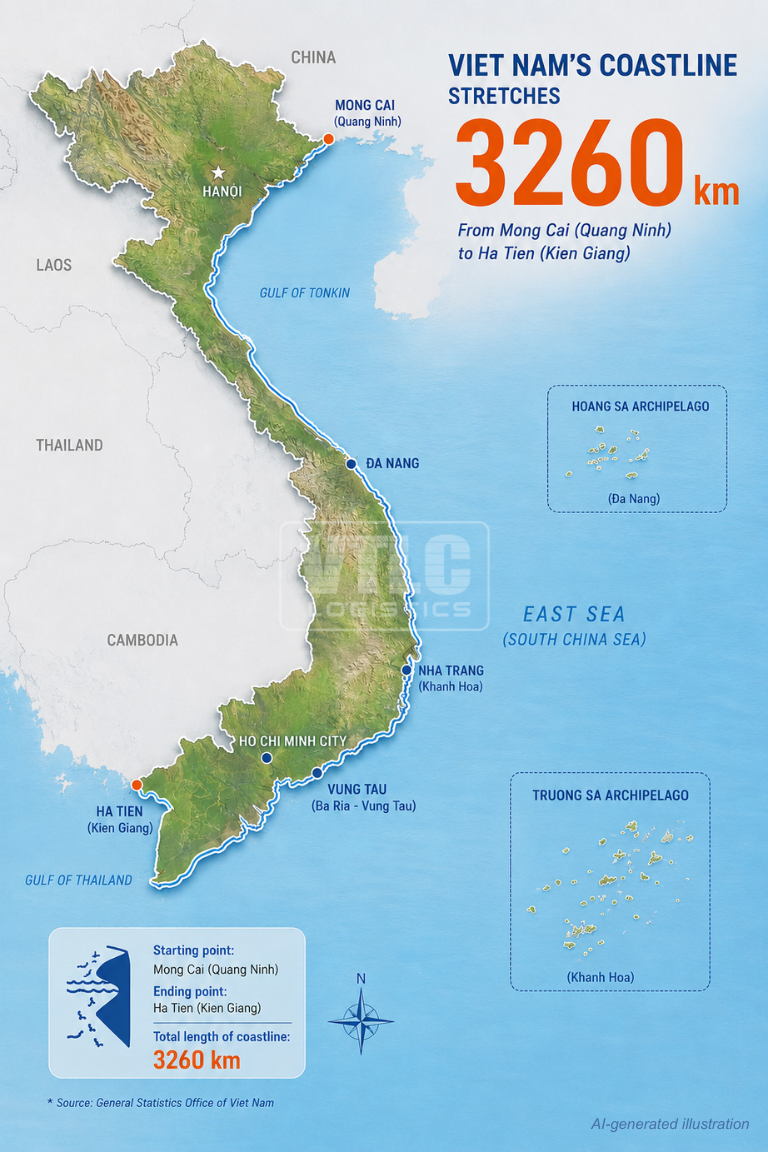
With more than 3,000 kilometers of coastline and favorable wind conditions – average wind speeds of 7–10 m/s at a height of 100 meters across many coastal areas in Central Viet Nam, South Central Viet Nam, the Mekong Delta, and offshore waters – Viet Nam is widely recognized by international organizations as one of the Asia-Pacific region’s most promising markets for wind power development.

According to published studies and assessments, Viet Nam’s total offshore wind technical potential is estimated at approximately 599 GW, including around 261 GW of fixed-bottom offshore wind (water depths below 50 meters) and 338 GW of floating offshore wind (water depths below 1,000 meters).

This resource base provides a strong foundation for large-scale renewable electricity generation while creating opportunities to develop a domestic supply chain supporting the renewable energy industry over the long term.

Vlc News Vn Coastline

  1. Strategic Targets Under Power Development Plan VIII

To fulfill its commitment to achieving net-zero emissions by 2050 announced at COP26, the Government of Viet Nam has established a national roadmap through the National Power Development Plan for 2021–2030, with a vision to 2050 (Power Development Plan VIII).

The revised Power Development Plan VIII clearly reflects the expanding role of wind power in Viet Nam’s future electricity mix, supporting the transition from conventional power sources to low-carbon energy.

Installed Capacity

Target by 2030

Vision for 2050

Onshore and Nearshore Wind Power

26,066–38,029 MW

84,696–91,400 MW

Offshore Wind Power

Approximately 6,000 MW

113,503–139,097 MW

Source: Ministry of Industry and Trade – Revised Power Development Plan VIII

The planned increase in offshore wind capacity from 6,000 MW by 2030 to nearly 139,000 MW by 2050 demonstrates Viet Nam’s long-term commitment to prioritizing offshore wind development.

According to the World Bank, developing offshore wind under an appropriate roadmap could help Viet Nam reduce more than 217 million tonnes of CO emissions by 2035. At the same time, localizing the supply chain – including the manufacturing of foundations, wind towers, and offshore substations – could contribute at least USD 50 billion in gross value added (GVA) to the national economy and generate approximately 700,000 full-time equivalent (FTE) job-years.

  1. Significant Potential, Yet Major Challenges Remain

Despite its natural advantages and clear development direction, wind power development in Viet Nam continues to face a number of challenges. Nationwide, the number of projects that have reached stable commercial operation remains relatively modest compared with the targets established for 2030.

3.1. Completing the Regulatory and Policy Framework

Many projects are awaiting further development of key regulatory mechanisms, including the electricity pricing framework, detailed zoning guidance following the National Marine Spatial Plan, offshore site survey licensing regulations, and investor selection criteria.

These elements are essential to establishing regulatory certainty and providing investors with the confidence needed to move projects into the next stages of development.

3.2. Transmission Infrastructure and Power System Operations

Unlike conventional power generation, wind and solar power output depends on weather conditions.

While most of Viet Nam’s strongest wind resources are concentrated in Central and coastal regions, major electricity demand centers are located elsewhere. This creates the need for coordinated investment in transmission infrastructure, energy storage systems, and power system dispatch to ensure renewable generation can be efficiently integrated while maintaining grid reliability and operational security.

3.3. Supply Chains and Supporting Infrastructure

In addition to power system requirements, wind power projects also place significant demands on project supply chains.

Major components – including blades, tower sections, and nacelles – are exceptionally large. Blades used in next-generation wind turbines can exceed 100 meters in length, while tower sections and nacelles can weigh hundreds of tonnes. Offshore wind projects present even greater logistical complexity, as transporting equipment from ports to offshore installation sites requires close coordination among port infrastructure, specialized transportation assets, and EPC contractors.

As turbine sizes continue to increase, investment in port infrastructure, specialized transportation equipment, and supporting technical services will play an increasingly important role in enabling future wind power projects.

  1. Looking Ahead: Turning Wind Resources into Electricity Generation

Although the challenges remain significant, they are similar to those encountered by countries that pioneered offshore wind development, including the United Kingdom, Denmark, and Taiwan, during their early stages of industry development.

The period following 2025 is expected to mark an important transition as Viet Nam moves from the preferential Feed-in Tariff (FIT) mechanism to a competitive auction framework. Together with ongoing efforts to refine regulations governing marine areas and improve the bankability of Power Purchase Agreements (PPAs), these developments are expected to improve the investment environment and facilitate the flow of international capital into the sector.

With abundant wind resources and a clear development roadmap under the revised Power Development Plan VIII, wind power is expected to remain a key component of Viet Nam’s future electricity mix. Continued progress in strengthening the regulatory framework, expanding transmission infrastructure, and developing supporting supply chains will be essential to achieving these objectives while advancing the country’s transition toward a sustainable, low-carbon energy system.

Contact VTLC for tailored transport solutions and competitive quotations.

Please provide details on cargo type, market, origin, destination, and estimated timeline.

Vantage Logistics Corp – South East Asia (S.E.A) Logistics Provider (The parent company of VTLC)

One-Stop Shop For Integrated Logistics Services

Head Office

Viet Nam – Suite 6.01, Floor 6th, Block A, RiverGate Residence,

151-155 Ben Van Don, Khanh Hoi Ward, HCMC, Viet Nam

Branch

Thailand, Laos, Cambodia, Malaysia, Indonesia, Singapore

Contact Us

Email

pro.sgn@vlc.com.vn

Office Tel

+84-28-36203611

Website

https://vtlc.vn/

Send your shipment enquiry today and receive a tailored transport plan from the VTLC team

Leave a comment