Managing temperature regimes, lead times, and specialized regulatory inspections across multimodal cold chain legs from gateway ports to receiving docks in Phu Quoc.
International Culinary Standards and Product-Specific Temperature Regimes
High-level diplomatic gatherings, summit banquets, and foreign delegation hosting for APEC 2027 demand uncompromising standards for premium food, beverage, and culinary ingredients across international 5-star resort complexes and the luxury hospitality sector in Phu Quoc. Depending on diplomatic menus and official dietary protocols, imported supplies are typically procured from producers operating certified food safety management systems such as HACCP or ISO 22000, with select consignments requiring strict Halal or Kosher certifications.
In cold chain logistics, different perishable categories require dedicated thermal bands:
Even a brief temperature excursion outside the approved threshold along the transit corridor can cause cellular breakdown, degrade organoleptic quality, and drastically shorten commercial shelf life. Under such conditions, consignments face immediate dock rejection by the hotel’s Quality Assurance and Quality Control (QA/QC) team right at the receiving bay.
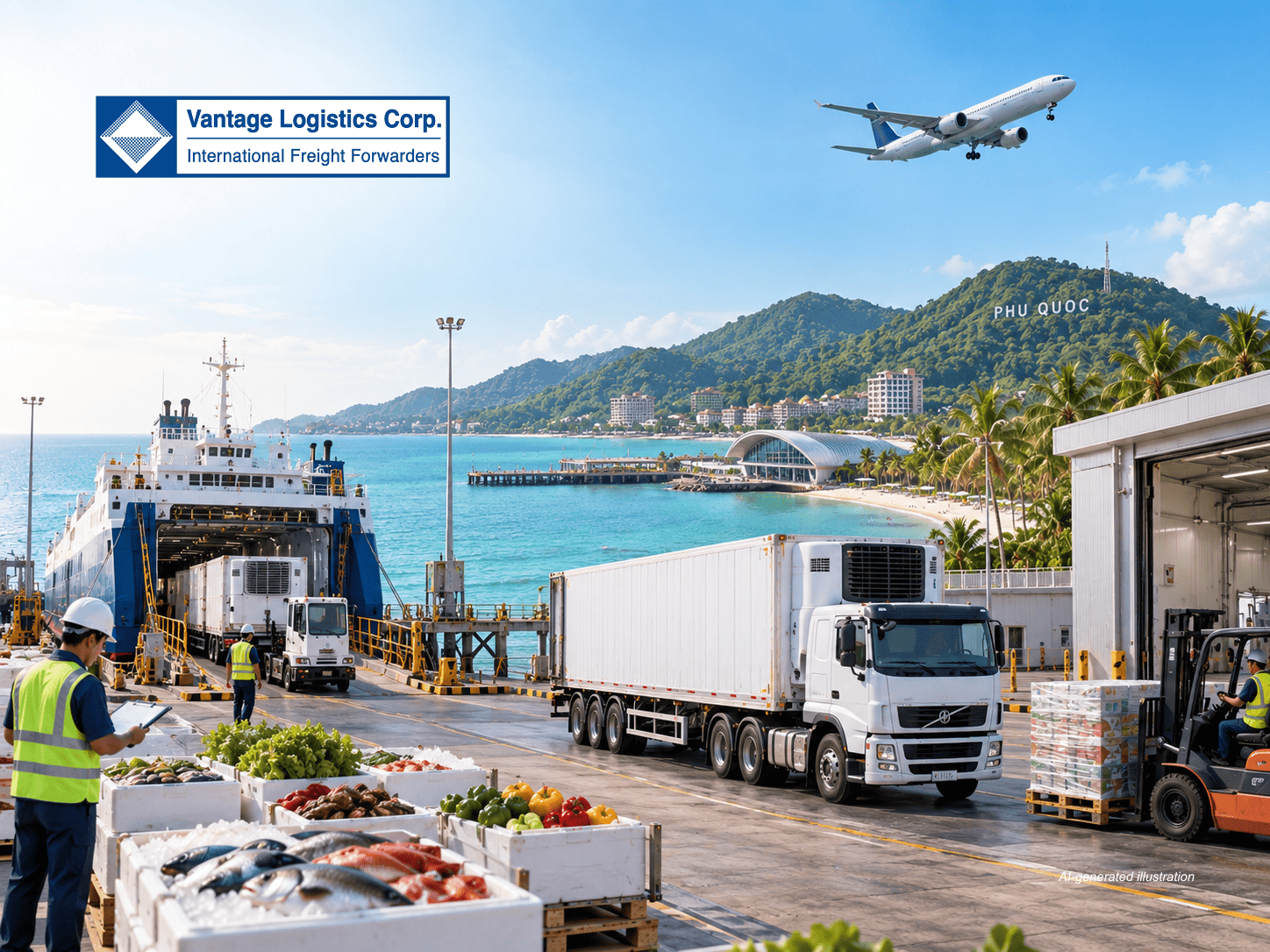
Inbound Cold Chain Vulnerabilities en Route to Phu Quoc
Transporting temperature-sensitive perishables from foreign origins to an offshore island involves operational risks across several critical nodes:
Depending on whether products are of animal or plant origin, their HS code, and the degree of processing, shipments may be subject to veterinary quarantine, phytosanitary inspection, or state food safety verification. Any discrepancy between commercial invoices, packing lists, and official Health/Phytosanitary Certificates–or non-compliant supplementary Vietnamese labeling–can trigger explanatory requests, supplementary sampling, and clearance delays. For refrigerated containers, extended terminal dwell times rapidly incur demurrage, detention, and daily reefer electricity/monitoring surcharges while diminishing product shelf life.
While domestic highway legs rely on specialized clip-on or underslung generator sets (gensets), moving reefer containers onto marine vessels (Ro-Ro ferries or specialized barges) introduces power continuity challenges. Vessel power supply capabilities, marine socket compatibility, transit duration, and sea-state operating conditions must be pre-confirmed. An unplanned loss of reefer power under tropical marine temperatures risks rapid internal thermal spikes.
Container door openings, cargo cross-docking, or extended quayside handling during vessel transfers increase the risk of exposing sensitive cargo to ambient tropical heat.
Luxury resorts in Phu Quoc enforce strict access windows, axle-weight limitations, and rigorous dock inspection routines. If marine arrival times and island reefer truck dispatch schedules are not synchronized, cargo risks being stranded at island ports during peak reception hours.
Vantage Logistics: Synchronized Multimodal Cold Chain Management
To control the risk of cold chain breaks, Vantage Logistics (the parent company of VTLC – Vinh Tan Logistics) integrates customs compliance, carrier technical monitoring, and local dispatch:
Audit veterinary/phytosanitary certificates, ingredient listings, shelf-life declarations, and Vietnamese supplementary labels while cargo is still at origin. Prepare online specialized inspection filings in advance to coordinate prompt quayside sampling and testing upon vessel arrival, reducing reefer container dwell times at mainland gateway ports (such as Cat Lai, Cai Mep, and Tan Son Nhat).
Coordinate with shipping lines and inland carriers to verify the structural and mechanical condition of reefer containers – including Pre-Trip Inspection (PTI) validation and set-point verification matching product specifications. For the cross-sea transit, liaise with marine operators to secure dedicated vessel power feeds, confirm plug compatibility, and establish technical emergency protocols.
Deploy independent, calibrated temperature data loggers to record thermal profiles throughout the multimodal journey. Extracted temperature logs provided at delivery offer hotel QA/QC teams objective proof of continuous temperature compliance.
Last-Mile Delivery and Receiving Bay Handover
The final delivery leg within Phu Quoc determines the overall integrity of the perishable supply chain:
For cold chains serving high-profile international summits and luxury hospitality, logistics performance goes beyond setting container thermostat dials – it requires synchronizing customs clearance, specialized regulatory quarantine, maritime power feeds, and delivery documentation at the destination dock.
Leveraging multimodal project experience and specialized cargo handling, Vantage Logistics partners with food importers, hospitality groups, and F&B suppliers to build reliable, end-to-end cold chains that align thermal control with project execution for APEC 2027 in Phu Quoc.
Are you an F&B importer or luxury hospitality group planning cold chain shipments to Phu Quoc? Contact Vantage Logistics to audit specialized inspection requirements, assess multimodal transit options, and establish an unbroken cold chain plan tailored to your product specifications and site delivery schedules.
Contact VTLC for tailored transport solutions and competitive quotations.
Please provide details on cargo type, market, origin, destination, and estimated timeline.
|
Vantage Logistics Corp – South East Asia (S.E.A) Logistics Provider (The parent company of VTLC) One-Stop Shop For Integrated Logistics Services |
|
|
Head Office |
Viet Nam – Suite 6.01, Floor 6th, Block A, RiverGate Residence, 151-155 Ben Van Don, Khanh Hoi Ward, HCMC, Viet Nam |
|
Branch |
Thailand, Laos, Cambodia, Malaysia, Indonesia, Singapore |
|
Contact Us |
|
|
|
pro.sgn@vlc.com.vn |
|
Office Tel |
+84-28-36203611 |
|
Website |
https://vtlc.vn/ |
Send your shipment enquiry today and receive a tailored transport plan from the VTLC team.

Leave a comment